
C9 / C9T Cold Forming Machine
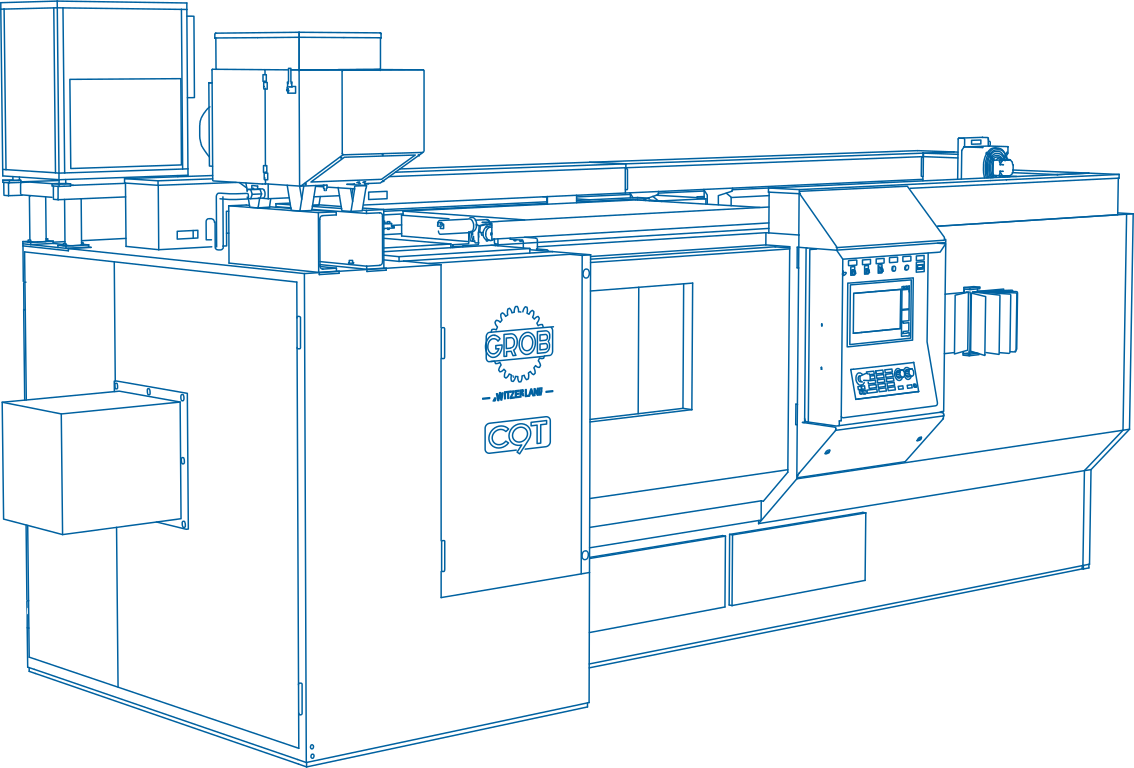
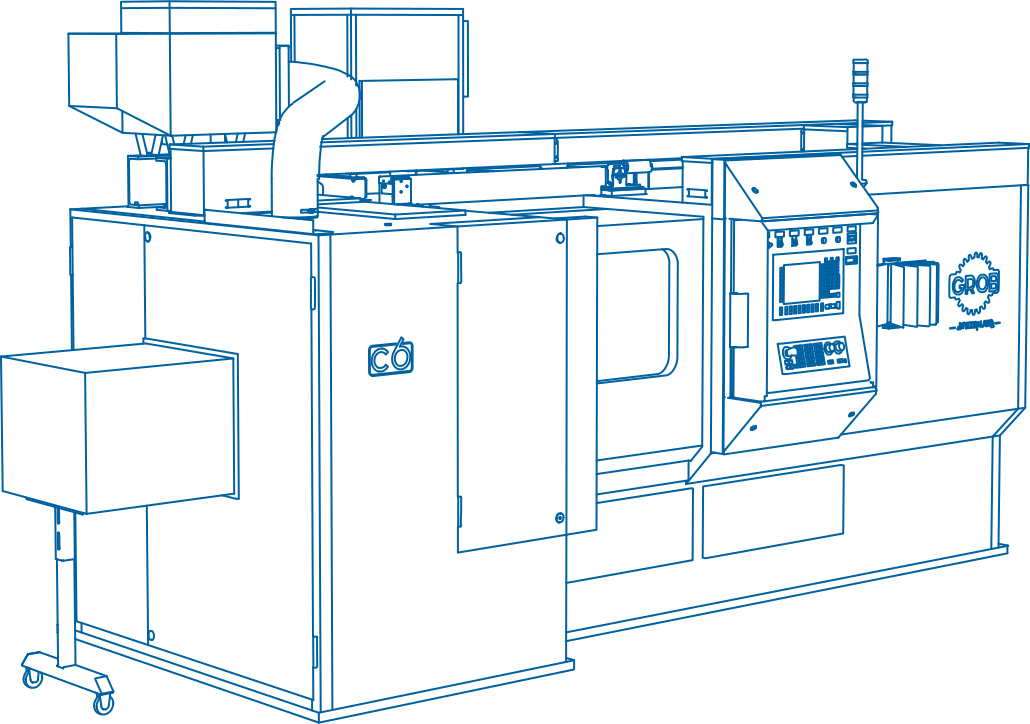
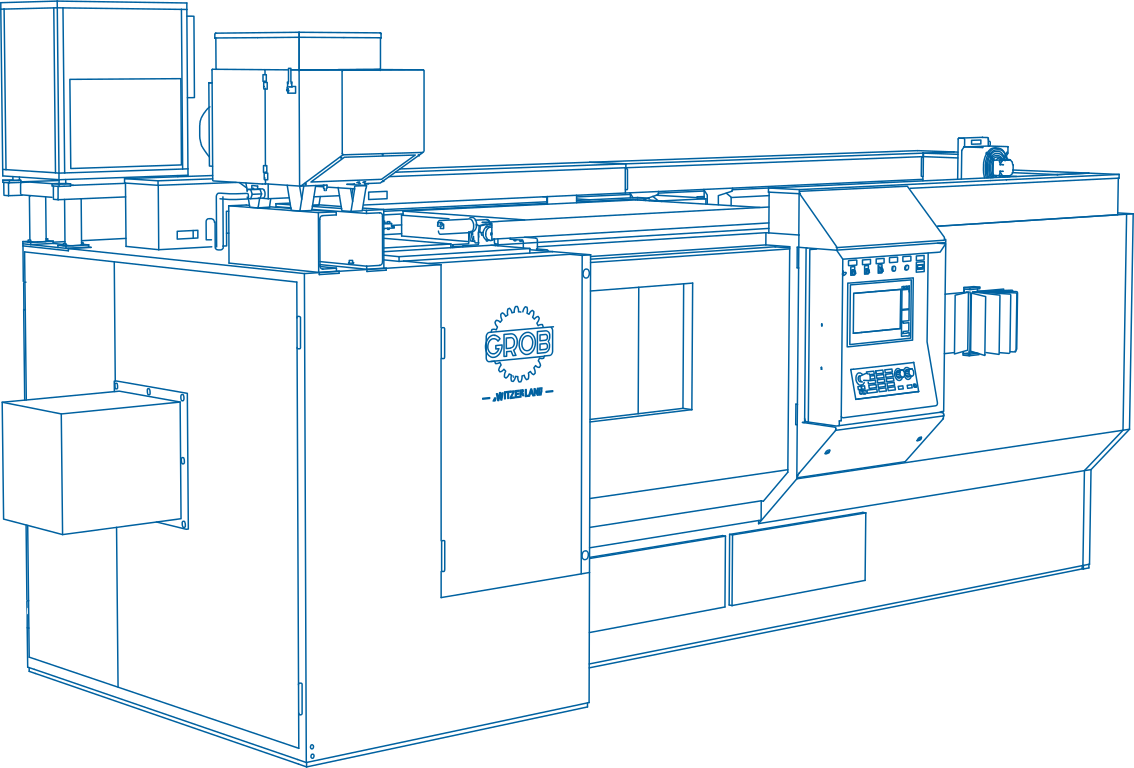
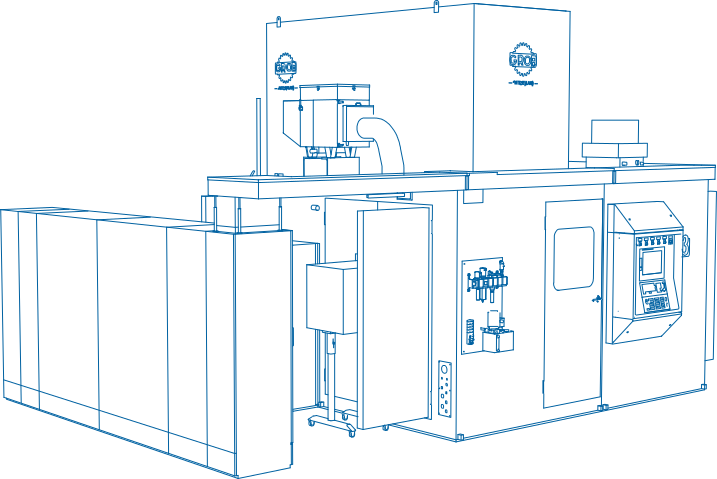
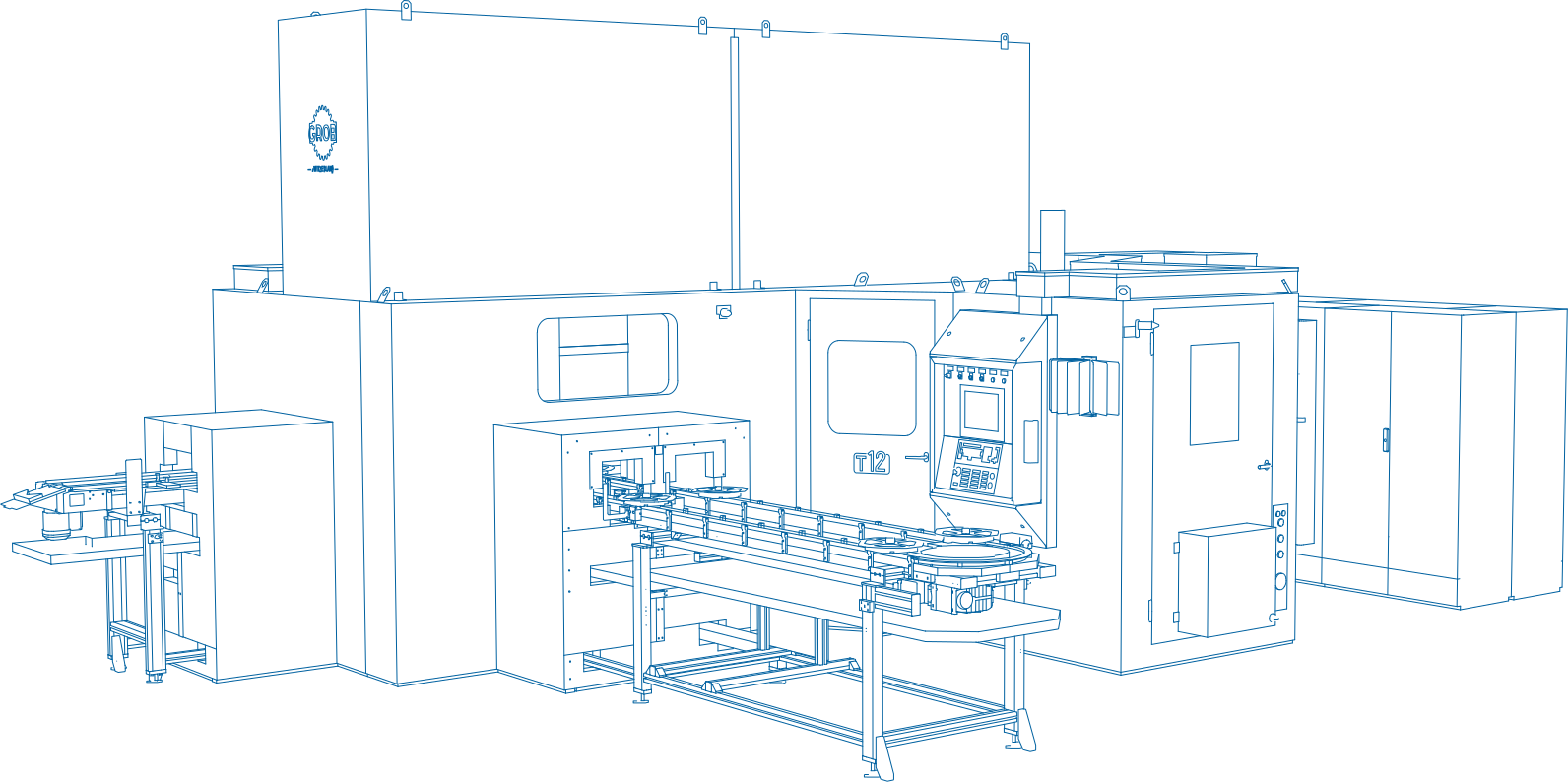
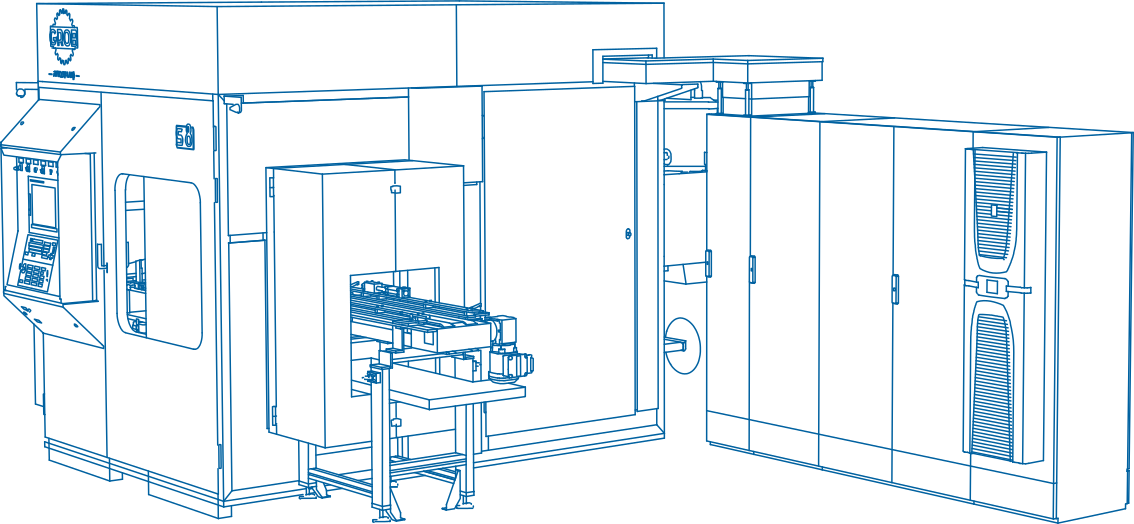
For larger spline dimensionsThe C9 and C9T cold forming machines are the larger siblings of the C6 machine and are suitable for the precise production of medium to larger splines using the Grob cold forming process. Like their smaller sister, the other machines in the C9 series are characterized by very short cycle and setup times, high process stability, and minimal tooling costs, making them ideal for a wide range of applications in the automotive, appliance, mechanical and equipment engineering industries, where high quality at low production costs is required.
Machine-specific application possibilities
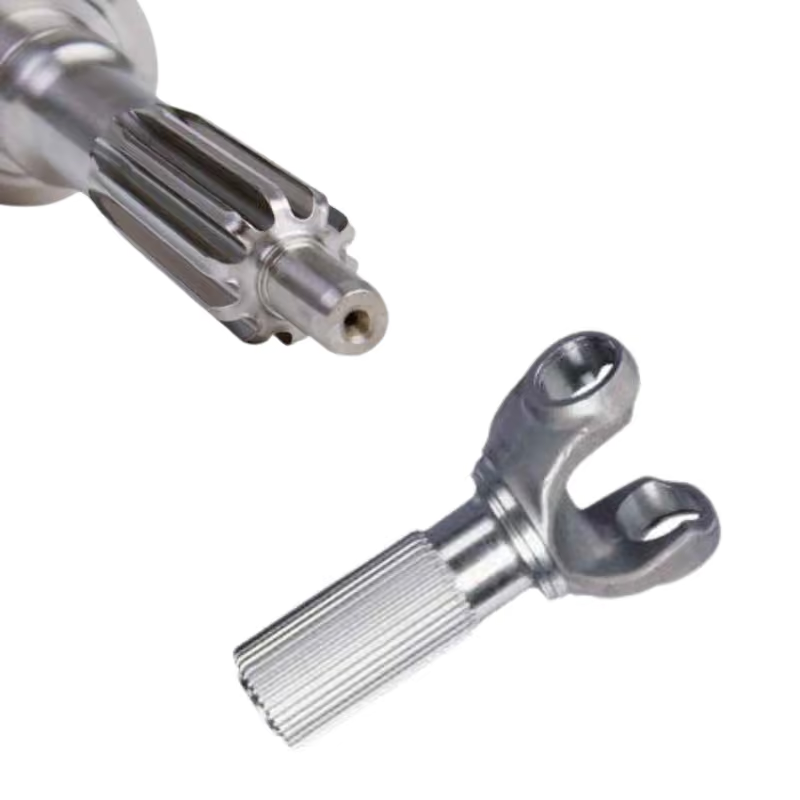
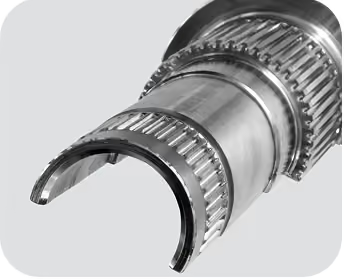
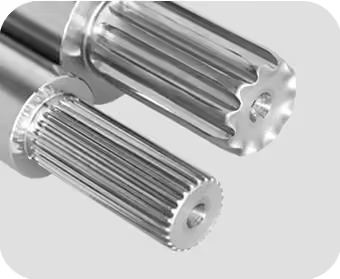
While the C9 is primarily used in the continuous partial process for classic involute splines, the C9T (T = torque drive) can also be used to cold form extremely difficult/heavy splines and spline-like geometries in the interrupted partial process. The C9T expands the range of applications to include the economical production of special profile geometries, including profiles with parallel flanks or splines with very few teeth. Even particularly long or complex workpieces can be economically formed with this machine – for example long splined shafts or clutch carriers made of sheet metal. The machines are very often used in the automotive industry for the production of torque-transmitting plug-in splines on shafts and axles, as used for example in the drivetrains of passenger cars, commercial vehicles or agricultural machinery. The cold forming machines have also proven themselves in series production of splines in equipment and mechanical engineering, thanks to very stable processes and correspondingly low spline costs.
Your advantages

Like all Grob machines, the C9 & C9T cold forming machines impress with their well-developed machine concept, focusing on efficiency, flexibility, and are based on decades of experience in the construction of cold forming machines.
They operate using the proven Grob cold forming process, in which the forming is divided into many small steps extending over the entire cylindrical section of the forming zone.
The splines produced in this way are characterized by cost-efficiency, highest precision, and surface quality, combined with the well-known advantages of cold forming: no destruction of the material structure, work hardening, improvement of the material structure, material savings, low distortion, etc.
Advantages of the C9 and C9T cold forming machines:
- Shortest machining times
- Interrupted partial process for extremely difficult/heavy splines
- C9T torque drive for continuous or interrupted partial process
- C9T torque motor for highly dynamic spline forming
- High process stability even in series production
- Minimal setup times thanks to universal design
- Maintenance-friendly, robust and durable
- Optional with Fanuc or Siemens control
- Number of workpiece teeth freely programmable
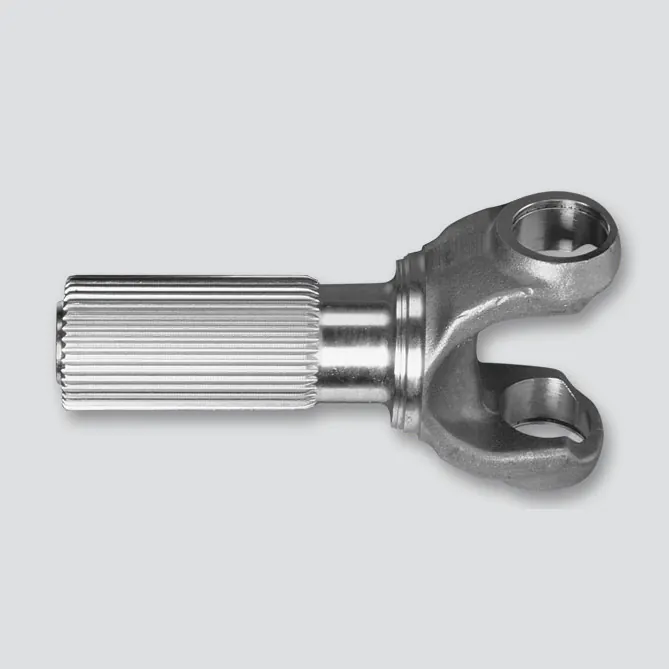
Workpieces made on this machine


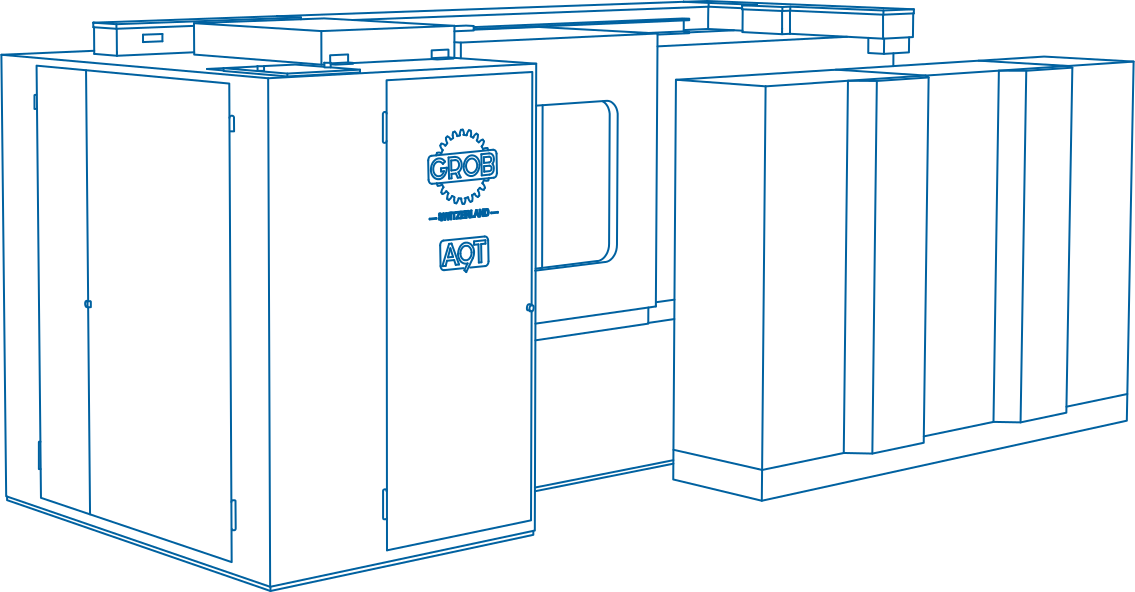
Grob Machines: Highly efficient instruments, specifically designed for your application

FAQ
Can very long workpieces also be splined with the C9/C9T cold forming machine?
To increase the spline length, both machines can be built with an extended machine bed if required, which enables the production of almost all standard spline lengths. Thanks to the torque drive of the C9T cold forming machine, re-indexing is also possible during cold forming, and theoretically unlimited spline lengths can be manufactured.
For which applications is the C9/C9T cold forming machine suitable?
The C9 is mainly used in the automotive, appliance, and mechanical engineering sectors – for example for the production of plug-in splines on axles and shafts or splines for various industrial applications, such as pump and shredder shafts.
How flexible is the machine configuration?
Both the C9 and C9T cold rolling machines can be individually configured – from layout to automation level, including workpiece holders and control system.
How flexibly can the C9/C9T cold forming machines be used?
Thanks to the well-thought-out tool holders, modular machine design, and freely programmable number of teeth, a wide variety of workpieces can be produced on the C9/C9T with minimal setup effort.
Is the C9/C9T cold forming machine also suitable for series production?
Yes. Due to very short cycle times, high process reliability, and the possibility to automate the machines according to customer requirements (robot, portal loader, …), the C9/C9T is ideally suited for series production of small to very large batch sizes.
What distinguishes the C9/C9T cold forming machine compared to machines from other manufacturers?
The C9/C9T offers very short cycle times, high process stability, and is particularly maintenance-friendly while having low acquisition costs.
What other advantages does the Grob cold forming process offer?
Work hardening, no destruction of the material structure, very low distortion after subsequent heat treatment, forming of solid material up to a strength of 1,500 N/mm², 1,100 N/mm² for sheet metal.
What spline geometries can be produced with the C9/C9T cold forming machine?
A wide variety of spline and spline-like geometries can be produced with the C9 and C9T – from classic involute splines to sawtooth geometries. Thanks to the torque drive of the C9T cold forming machine, extremely difficult/heavy splines – such as parallel-flanked profiles or splines with few teeth – can also be produced in the interrupted partial process.
What spline quality can be achieved with the Grob cold forming process?
According to DIN 5 – 7*, e.g. DIN 5480, 3960 or 3962 * Quality 5 partially.
What surface finish can be achieved with the Grob cold forming process?
Surface roughness of at least Ra 0.4 ~ N5
What types of splines can be produced with the C9/C9T cold forming machine?
A wide variety of spline and spline-like geometries can be produced with the C9/C9T – ranging from classic involute splines to sawtooth geometries.
Which control systems are available?
The machine can be equipped with either Fanuc or Siemens control.
Which process is mainly used on the C9 cold forming machine?
The C9 operates in the continuous partial process using the long-established Grob cold forming process, a chipless forming process for the production of splines and spline-like geometries. The Grob cold forming process enables highly efficient and precise production of splines with small to medium modules.
Which process is mainly used on the C9T cold forming machine?
The C9T operates in the interrupted partial process using the long-established Grob cold forming process, a chipless forming process for the production of splines and spline-like geometries. The Grob cold forming process is applied here in the continuous partial process, which enables highly efficient and precise production of splines with medium to larger modules.
