
Clutch plate carrier
A clutch plate carrier is a component of multi-plate clutches that guides the clutch plates via an internal or external spline. Ernst Grob produces plate carriers through a continuous process chain from the blank to the finished part, using spinning, cold rolling, and slotting and coining.
What is a clutch plate carrier?
A clutch plate carrier holds the plates of a clutch. The plates engage with the spline of the carrier and can run on the inside or outside. Clutch plate carriers are used in clutches in the automotive industry.
- Simple, cost-effective tooling: Even complex parts can be produced with simple tools.
- Three different profile types possible: Some other manufacturers are not able to offer all of these.
- Thin sheet metals can also be processed: High-quality parts can still be produced from thin sheet metal.
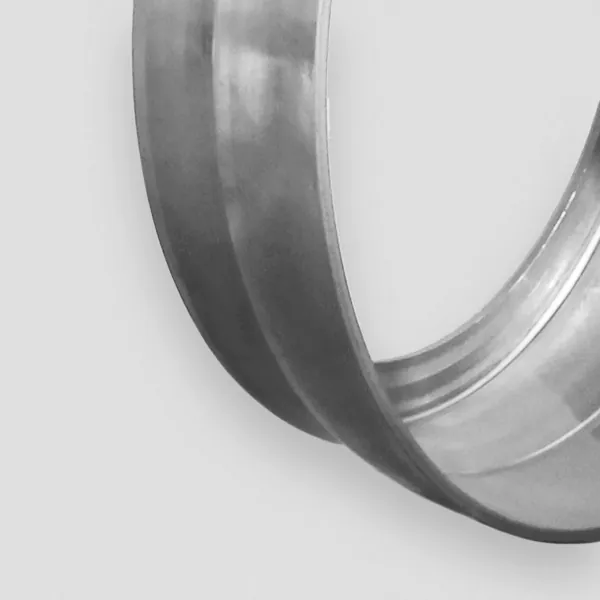
- Stiffening collar: For higher rigidity at high rotational speeds, a stiffening collar can be formed onto the component.
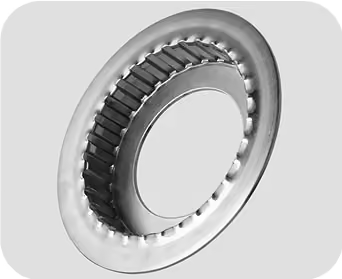
Manufacturing at Ernst Grob
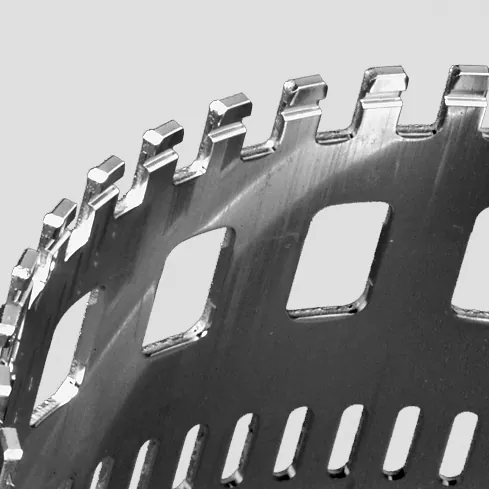
Ernst Grob produces clutch plate carriers through a process chain that starts differently depending on the geometry of the finished part. The R3 forms a cup from the blank by spinning, the T12 cold rolls the spline onto the cup, and the S8 performs follow-up operations such as chamfers, grooves and holes by slotting and coining.




More workpieces
FAQ
How is a clutch plate carrier made at Ernst Grob?
A cup is formed from the sheet metal blank by spinning, and the spline is then cold rolled onto it. Follow-up operations such as grooves and holes are performed by slotting and coining.
Which materials are used for clutch plate carriers?
Sheet metals such as S355MC, S420MC, DC04, HSLA-340/410 and SAPH440 are used for clutch plate carriers. Which material is used depends on the region (Europe, America, Asia).
Can thin sheet metals also be processed for producing clutch plate carriers?
Yes. High-quality clutch plate carriers can also be produced from thin sheet metal.
