
Stub axles
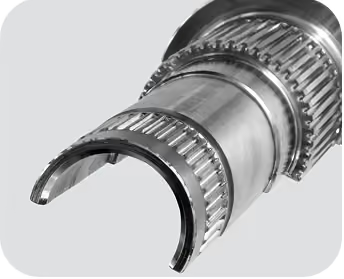
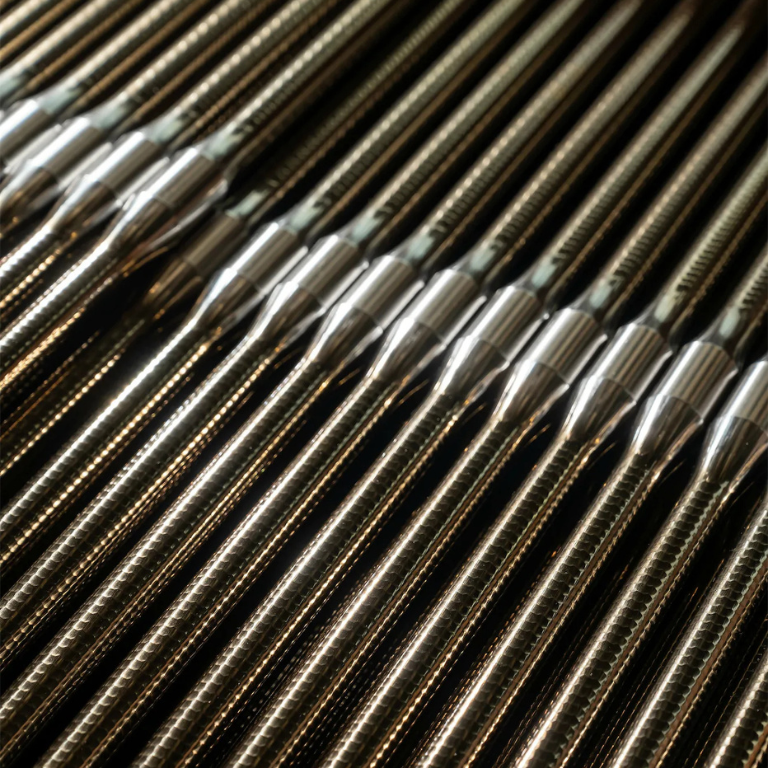
A stub axle is a splined shaft that transmits torque between two components via a plug-in, positive-locking connection. Ernst Grob produces the spline by chip-free cold forming, using either cold rolling or intermittent forming depending on the position of the spline. The result is a work-hardened spline with a high surface finish.
What is a stub axle?
A stub axle is a shaft with a longitudinal spline that is inserted as a mating part into a matching internal spline. Through this positive-locking connection, it transmits torque between two rotating components. The spline can extend close to the shaft shoulder, allowing full torque transmission even where installation space is limited.
Production by cold forming offers advantages over machined splines:
- Work hardening: During forming, the material grain flow is not cut but follows the spline contour. This increases the strength and service life of the stub axle. (See more here)
- High surface finish and dimensional accuracy: Forming produces a precise, uniform spline. (See more here)
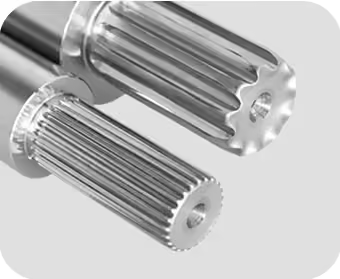
Manufacturing at Ernst Grob
Depending on the position and module of the spline, stub axles are produced on the C6, C9 / C9T or A-Series cold forming machines. All of them work with the proven Grob cold forming process.


More workpieces
FAQ
How does a cold-formed stub axle differ from a machined one?
In cold forming, the material grain flow is preserved and the spline is work-hardened. The result is higher strength and a longer service life than with machined splines.
Which materials are suitable for stub axles?
CK45 is common. For applications with particular requirements for corrosion resistance, for example in pumps, stainless steels are used.
Can the spline extend to the shoulder?
Yes. With the A9T and C9T machines, the spline can be formed close to the shoulder by intermittent forming. If the shoulder is further away, the spline is produced by cold rolling on the A9 or C9 machines.
